seo
The goal of SEO is to increase visibility in search results, making it easier for people to find relevant, trustworthy, and useful content when they search for information, products, or services. This involves optimizing webpages, improving technical performance, and building credibility through links and engagement—so that both search engines and users see your site as valuable.
For example, if you sell coffee, SEO can help your website show up on the first page of Google when people search for “buy coffee”. Higher rankings lead to more clicks to your website, and that means more po
Why is SEO important?
tential customers for your business.There are two main reasons why SEO is important:
- People use Google to find all kinds of things, including products, services, and any helpful information about them. That creates search demand, which many websites compete for. The outcome of effective SEO is outranking the competition to take advantage of that search demand.
- Unlike online advertising, the traffic you get through SEO is free.
Overall, SEO benefits include free, sustainable, and passive traffic to your website month after month.
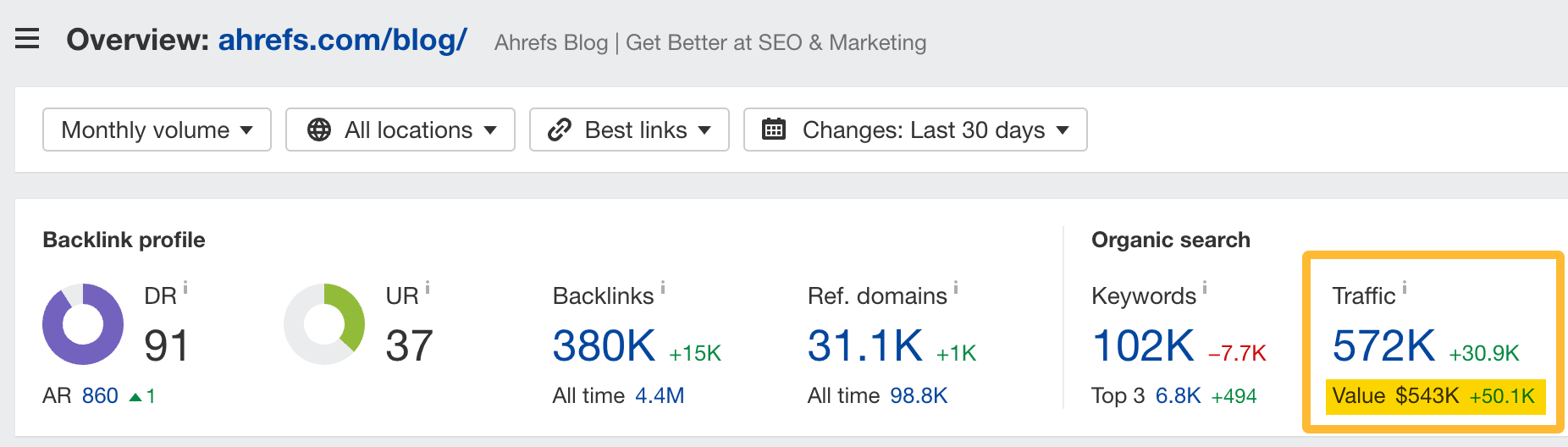
To illustrate, our blog generates an estimated 572K visits per month from Google. Without SEO, we’d have to spend over $0.5M on ads to get that traffic.
How search engines work
Search engines are designed to help you find information on the internet. They use two main components:
- Search index. A digital library of information about web pages.
- Search algorithms. Programs that match and rank results from the index based on your search query.
Search engines work in three phases:
- Crawling: Web crawlers (or spiders) visit and download webpages by following links from known pages.
- Indexing: The information from crawled pages is processed and added to the search index.
- Ranking: When you perform a search, the algorithm ranks relevant results based on various factors to provide the best answers.
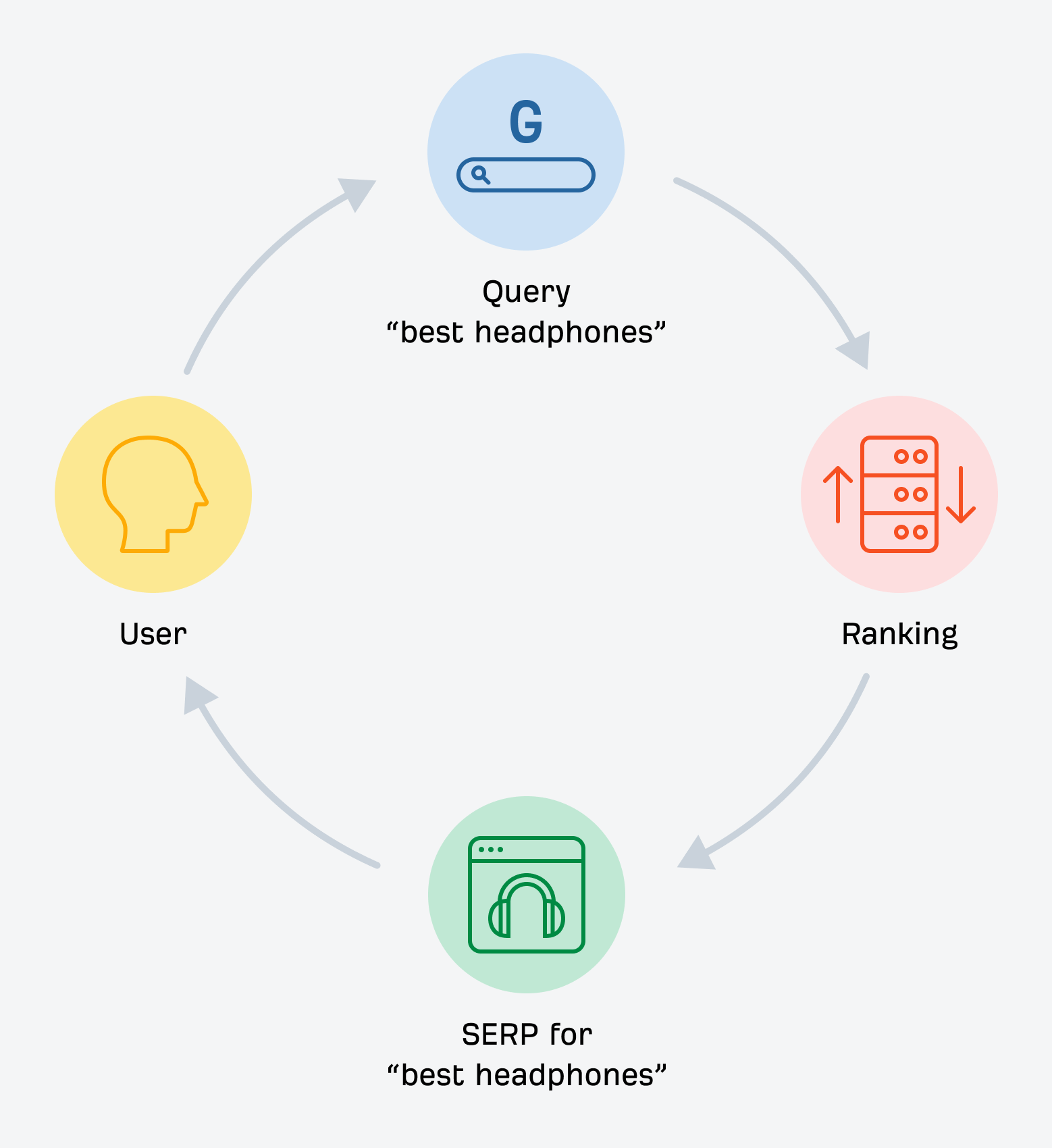
So, in a nutshell, when you search, search engines look through all the pages in the index for relevant results. They then rank them using a computer program called an algorithm to put the best results at the top and display a search engine result page (SERP) to the user.
What poses the main difficulty for SEOs here is that, except for some privy people at Google, nobody really knows how this ranking algorithm(s) works, so there is a lot of trial and error in the SEO industry.
Google holds a number of patents related to how their search works in order to prevent manipulating search results and copying the secret formula of their multibillion-dollar business.
That said, they still leave clues through their spokespeople and pages like “How Search Works”:
To give you the most useful information, Search algorithms look at many factors, including the words of your query, relevance and usability of pages, expertise of sources and your location and settings. The weight applied to each factor varies depending on the nature of your query – for example, the freshness of the content plays a bigger role in answering queries about current news topics than it does about dictionary definitions.
We also have evidence of some of the ranking signals Google uses. Here are the seven they already confirmed:
- Backlinks.
- Relevance (search intent).
- Freshness.
- HTTPS (site security).
- Mobile-friendliness.
- Page speed.
- Intrusive interstitials.
But that’s not all. Google likes to “stir things up” a bit by personalizing search results based on:
- Location. Shows results relevant to your geographical area.
- Language. Ranks content in the language you understand.
- Search history. Tailors results based on your past searches.
Further reading
How SEO works
SEO works by creating high-quality, relevant content with good UX about things people search for, and then proving to Google it deserves to rank.
To do SEO effectively, these four things matter the most:
- Keyword research.
- Search intent.
- Content quality.
- User experience and usability of the page.
1. Keyword research
To drive organic traffic, your content needs to be created specifically for topics that people actually search for. Otherwise, no one will be able to find your page on Google’s search result pages (SERPs), and you won’t get any organic traffic.
At the same time, the best kind of topics are the ones that hold business value to you. Otherwise, you’re unlikely to attract potential customers through SEO.
To find topics that meet both criteria, you need a keyword research tool like Ahrefs’ Keywords Explorer.
The general process of keyword research goes like this:
- Enter a few industry-related “seed” phrases. For instance, “parenting”, “newborn”, “toddler”, “babies”, “kids”.
- Refine the list with filters such as keyword difficulty, minimum traffic potential, or excluding keywords you already rank for.
- Pick keywords that fit your website best